5 Questions to Guide Family Discussions on Charitable Giving

March 28, 2022

Making a charitable plan takes thoughtful preparation. Including family members can complicate the process -- your family might have diverse perspectives and varied philanthropic interests, making an agreed-upon plan challenging, but certainly not impossible.


Stephen Zaloom serves on Palm Health Foundation’s Board of Trustees, Audit Committee and Philanthropy Committee. Here, he shares five important questions families should ask themselves before they make charitable plans together. 

1)   Should we engage a professional advisor to start the conversation? While most advisors believe that discussions on family philanthropy are important, statistics show that as few as one-sixth of advisors initiate these discussions with their clients. Families with charitable objectives shouldn’t hesitate to open this important conversation.


2)  Should we involve the next generation? Families should involve children and grandchildren in their philanthropy. This can establish family traditions, personal values and promote cooperation among family members. Charitable planning can also be part of a wealth transfer plan between generations, so educating family members on the estate planning tools being used can lay the groundwork for the next generation of philanthropists.


3)  Should we incorporate estate planning tools into our philanthropy?  Sometimes the outright giving of cash or appreciated assets is the simplest way for donors to make a lasting impact. However, families should consider planned gifts—those that incorporate financial or estate planning. Some planned giving options include partnering with a foundation or establishing charitable gift annuities, a donor advised fund or a split-interest charitable trust. 

Establishing a relationship with a local foundation that has a mission in alignment with your family’s philanthropic goals can make planned giving easy. Foundation staff will match your interests with appropriate giving opportunities and manage all the work for you, providing regular updates on the impact of your gift, and allowing the family to be as involved or hands-off as they want to be. 

4)   What will be the impact of our family’s philanthropic efforts?  An engaged donor is one who is invested in the impact of their philanthropy.  When giving to a non-profit, for example, it’s important to assess the gift outcomes. Evidence of success offers both the donor and the non-profit the opportunity to attract other donors and expand the cause’s reach. 


5)   Should our family’s giving be public or anonymous?  Aside from recognition, giving publicly can lend credibility to a cause and perhaps encourage other donors to follow.  On the other hand, one might feel that impact is best achieved if attention is focused on the cause rather than the donor. Many are simply more comfortable conducting their charitable activity with privacy, and the public recognition may feel more like a burden.  


Whether to give publicly or anonymously is a very personal decision for which there is no right answer. As a family, have an open conversation weighing the pros and cons before coming to a decision that suits you. 


“The most effective donors are those who are engaged in their philanthropy.  These questions can guide family discussions, ignite engagement and ensure that the impact of your charitable giving is meaningful, rewarding and builds a lasting legacy.” – Stephen Zaloom, J.D., LL.M. CAP®, Board Certified Attorney, Wills Trusts & Estates, Jeck, Harris, Raynor & Jones, P.A.

October 27, 2026
Three artists, a room full of caregivers, and a sway that follows them home.
October 19, 2026
As OJ says, “Sometimes, just showing up with patience and kindness can make all the difference.”
October 19, 2026
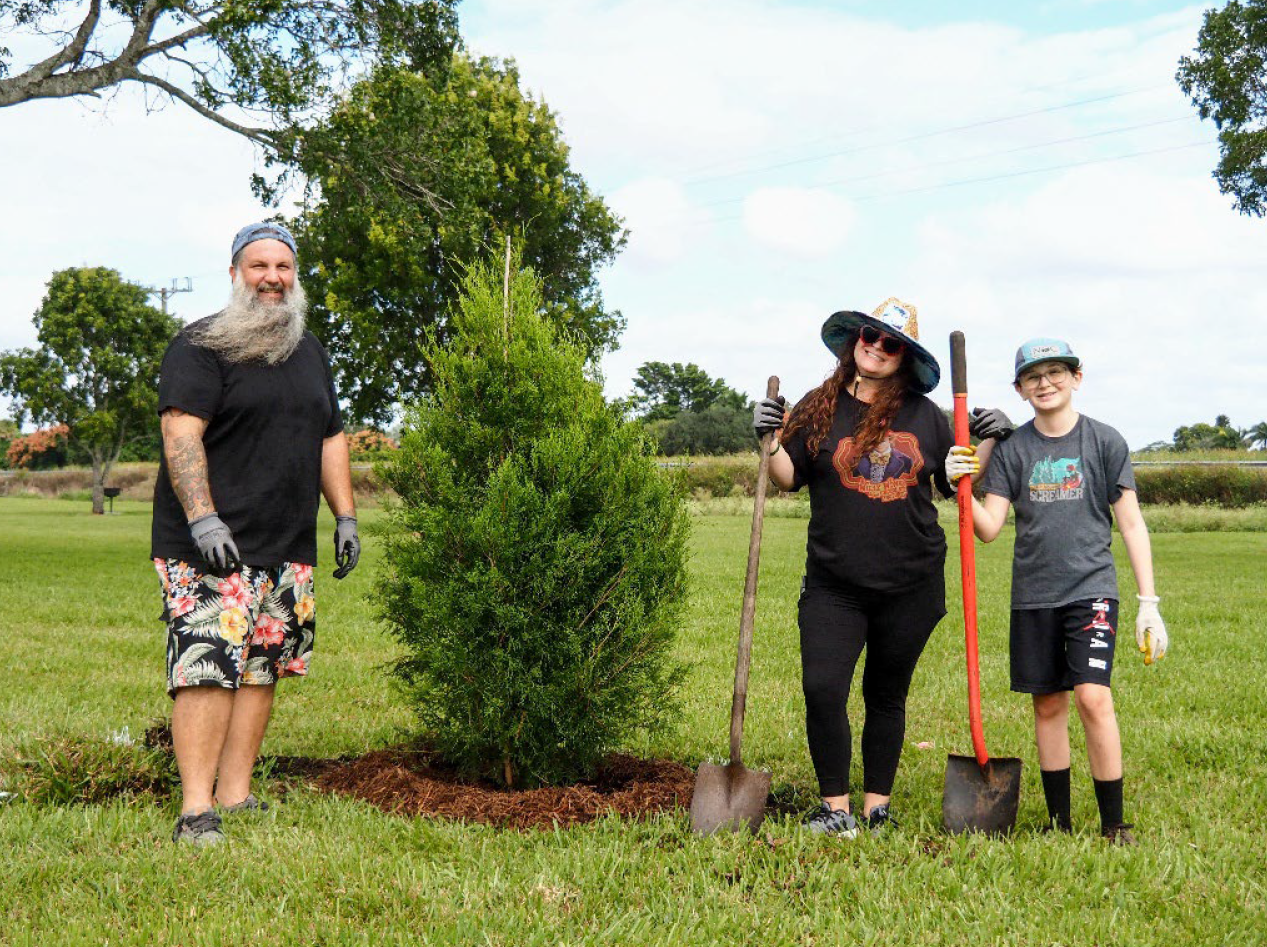
Community Greening has planted more than 30,000 trees in South Florida. Some of the volunteers were sent by their therapists.
October 19, 2026
Grace Notes Music Foundation is proving that music isn't just an art form—it’s brain science.
October 13, 2026
Reception unites nursing, mental health, and behavioral health students with the donors and fundholders investing in their education 
September 26, 2026
Dr. Roger L. Duncan III and Elisa Cramer join board of trustees; Dr. Paul Rashid appointed to Community Investment Committee
September 25, 2026
The Mike McNamara Scholarship Fund at Palm Health Foundation became her lifeline.
September 24, 2026
"Connected Along the Brain Coast" campaign brings brain science out of the lab and into Palm Beach County communities this October
August 26, 2026
New initiative activates South Florida's Brain Coast to help close 17-year gap between scientific discovery and impact. 
May 28, 2026
Aspen Institute spotlighted BeWellPBC , a Palm Beach County behavioral health movement supported by Palm Health Foundation, and their Community Connectors , a group of advocates that help improve the health and wellbeing of their neighborhoods by serving as a bridge between residents and private and public health services.  These Community Connectors are deeply trusted and have helped their communities navigate complex health challenges – like when one neighbor didn’t know what to do when her husband was admitted to a nursing home as his dementia worsened.